
Learn
Chinese Paper Cutting: History, Folds and Cuts
Updated 2026-11-13
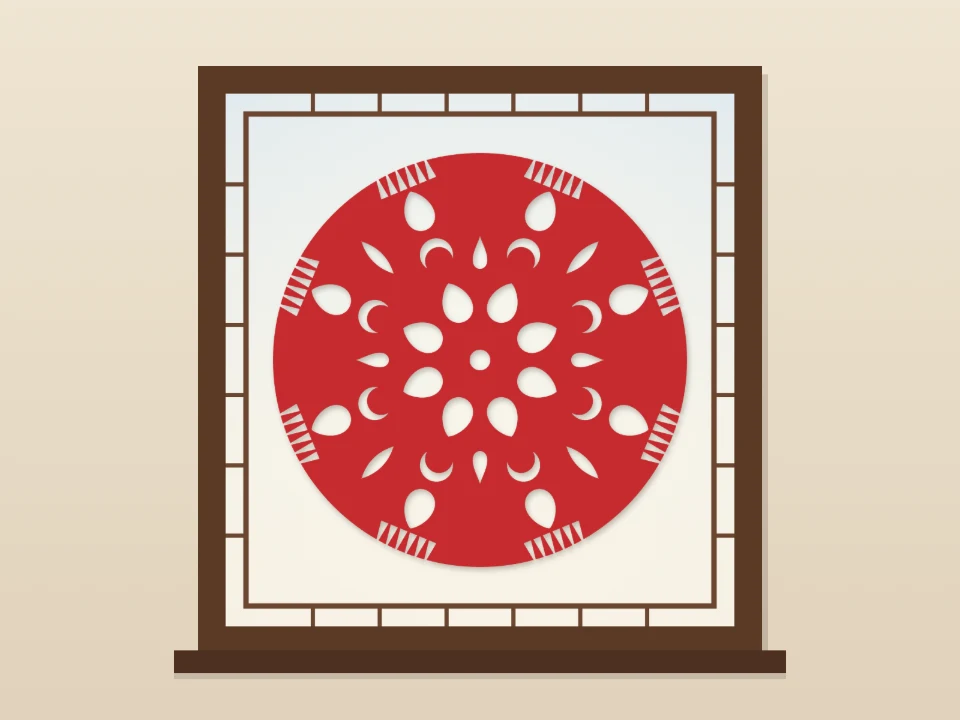
Chinese paper cutting (剪纸, jiǎnzhǐ) is the folk art of cutting designs into paper with scissors or a carving knife, to decorate everyday life and to go with other folk customs. It has been practised for at least 1,500 years[1], it is found all over China and among many of its ethnic groups, and in 2009 it was inscribed on UNESCO’s Representative List of the Intangible Cultural Heritage of Humanity[2]. Most patterns start the same way: fold the paper, cut through every layer at once, and open it up. This guide covers where paper cuts go, a little history, how folding makes the pattern, and how to cut your own.
Where Chinese paper cutting is used
- Windows and rooms. UNESCO lists windows, beds and ceilings among the places paper cuts decorate[2]. Paper cuts for windows are called window flowers (窗花, chuānghuā); in Yu County, Hebei, the local paper cuts are known by that name, a tradition more than two hundred years old[3].
- Festivals and family occasions. Paper cuts go with weddings, birthdays and other ceremonies[2]. In Xunyi, Shaanxi, cutting window flowers and wall pictures for the New Year and other festivals is a skill local women are expected to have[1].
- North and south. Northern paper cuts tend to be bold and are part of daily life: window flowers, decorations for the wall round the kang (a heated brick bed), pillow, wedding and birthday flowers, and pictures of the door and stove gods. Yu County, Zhongyang and Ansai are among the best known. Southern work is finer, as in Guangdong, Yangzhou, the fine-line carved paper of Yueqing, and Pujiang[1].
A short history
- Early cut paper. The Victoria and Albert Museum holds, on loan from the Stein Collection, nine paper flowers of coloured and inked paper, cut and pasted together, found in Cave 17 of the Mogao Grottoes near Dunhuang and dated between 600 and 1000[4].
- Who cuts. UNESCO describes paper cutting as a predominantly female pursuit, handed down from mother to daughter beginning in childhood[2].
- Protection. China put paper cutting on its first national list of intangible cultural heritage in May 2006[1]. By a 2018 count the national list held 53 regional paper-cutting entries from 22 provinces, autonomous regions and municipalities, and 47 people had been named national representative inheritors of the craft, 30 of them women[1].
How folding works in Chinese paper cutting
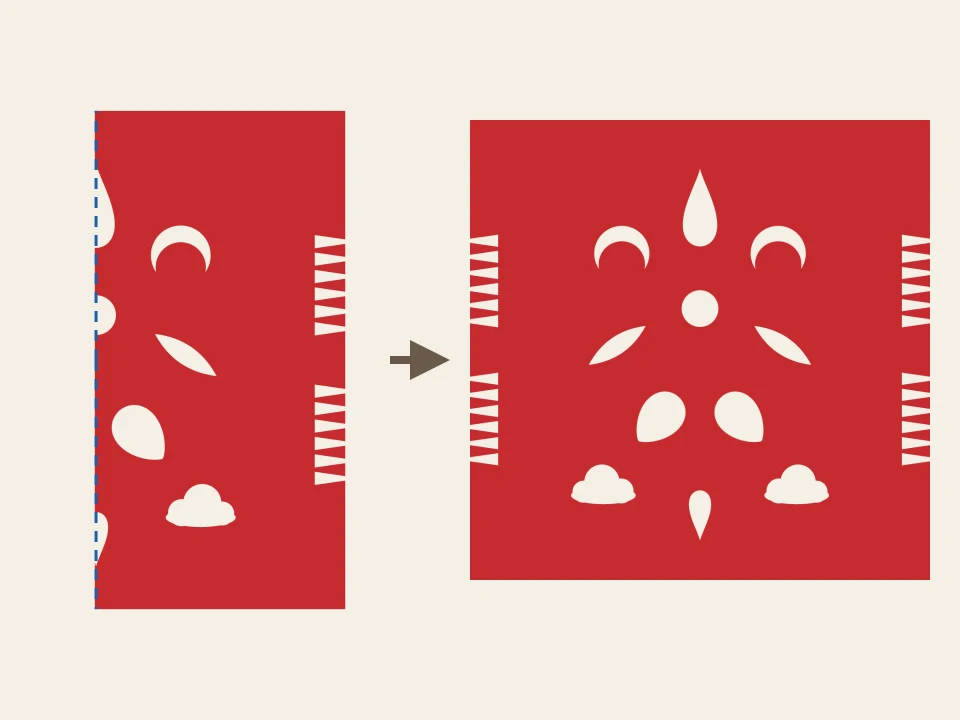
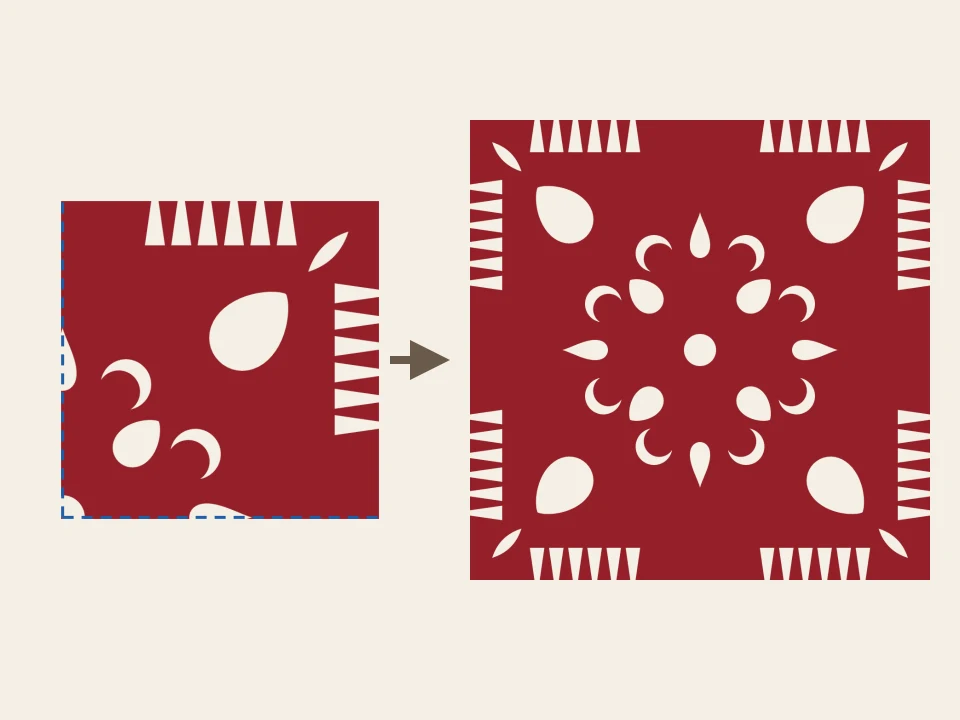
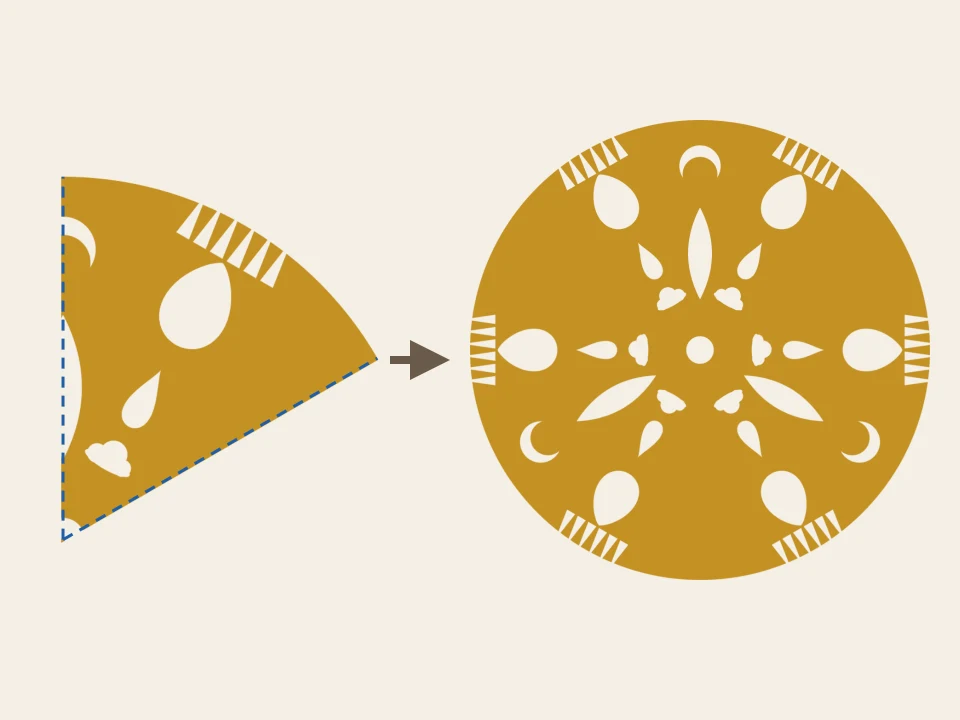
Every fold is a mirror. Cut through a folded stack and, when you open it, every layer carries the same cut, flipped across each crease. The number of layers decides how often the design repeats. Folding is part of the traditional repertoire too: it is one of the forms listed for the dyed paper cuts of Guangling, Shanxi[5].
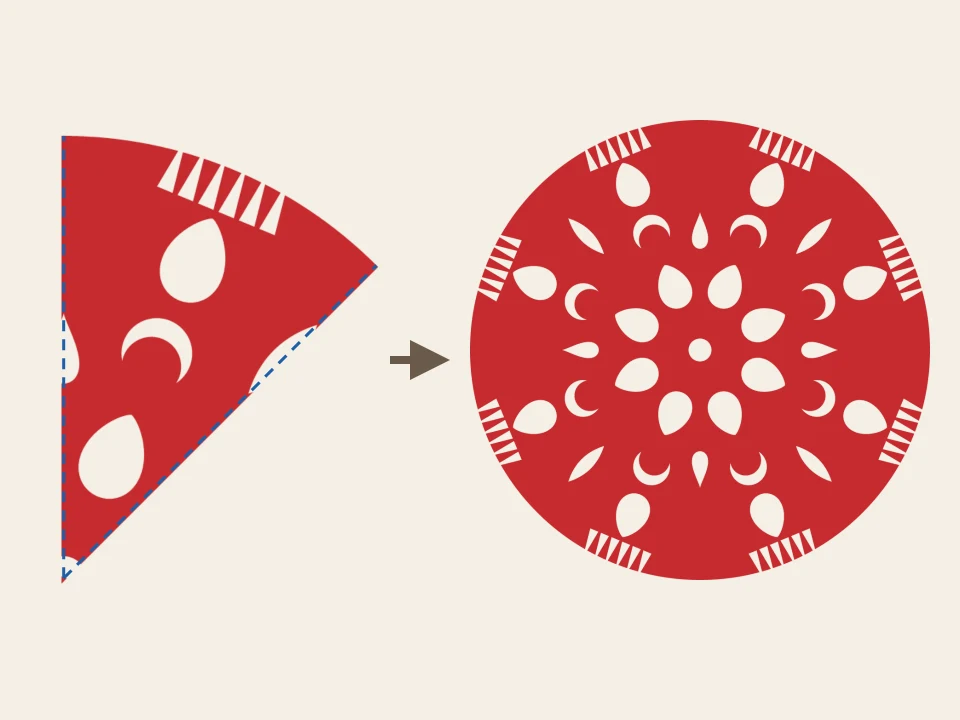
A few things that hold whatever the fold:
- Shapes on a crease open double. Half a drop cut against the fold becomes a whole drop; half a heart, a whole heart.
- Shapes in the middle of a layer repeat. They come out as separate holes, one per layer.
- Leave bridges. Paper that a cut goes all the way round falls out when you open it. Keep a strip joining each part to the rest.
- Six folds need round paper. A square folded in six has corners that do not line up, so cut the circle first.
Cut a Chinese paper cut online
The YinSeal paper cutting studio works the same way as scissors and a folded sheet. Pick a fold and a paper colour, then cut the folded paper with stock shapes (crescent, sawtooth, willow leaf, water drop, petal, cloud, round hole), straight cuts or freehand. The opened sheet updates next to it as you cut, loose bits show faded, and On a window shows the piece on a drawn window. Or start from one of 14 ready-made designs for Lunar New Year, weddings and flowers: see the Chinese paper cut SVG templates.
When you take a paper cut away you get:
- papercut.svg: a cut file in millimetres for cutting machines whose software imports SVG;
- papercut.dxf: the same outlines for laser cutters and CAD;
- papercut.png: the finished piece on a transparent background;
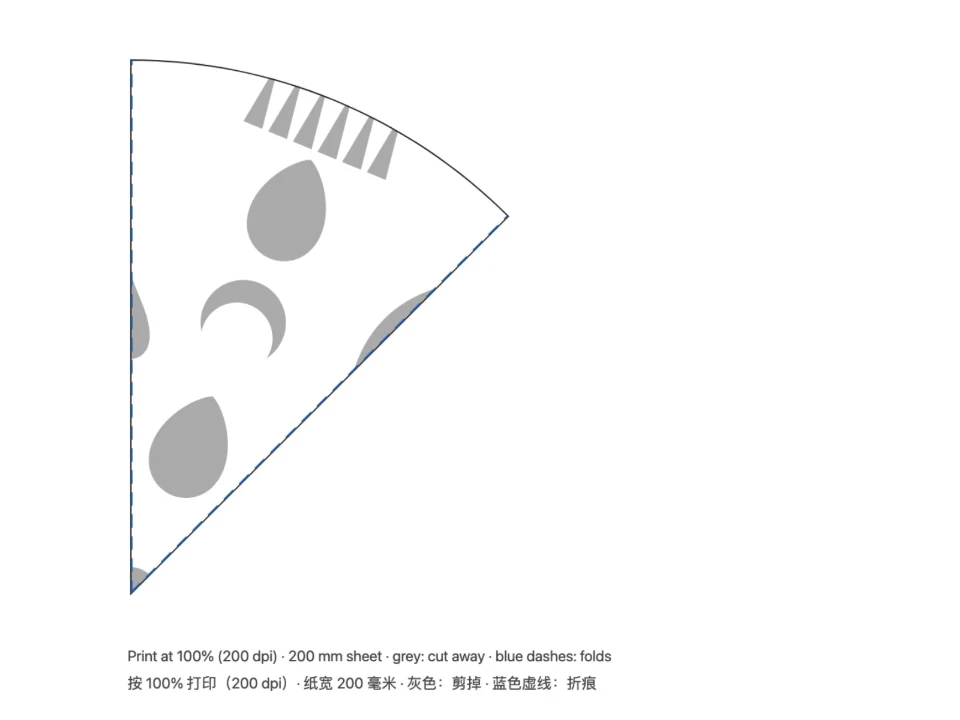
- papercut-template.png: the folded layer at true size, to print at 100%, hold on your folded paper and cut by hand;
- papercut-window.png: the window picture.
Anyone can use the studio. What you make shows a watermark until you take it away with a download or the yearly pass.
Pick a fold, cut the folded paper, and watch it open up.
Chinese paper cutting: common questions
- What is Chinese paper cutting called in Chinese?
- Jiǎnzhǐ (剪纸), "cut paper". Paper cuts made for windows are called window flowers, chuānghuā (窗花); the paper cuts of Yu County, Hebei, also go by that name.
- Is Chinese paper cutting on UNESCO’s heritage list?
- Yes. Chinese paper-cut was inscribed on UNESCO’s Representative List of the Intangible Cultural Heritage of Humanity in 2009, three years after China put it on its first national list.
- How many times should I fold the paper?
- Fold in half for anything that should mirror left and right, such as a vase, a butterfly or a face. Fold in quarters or eighths for round flowers and square corner pieces. Six folds repeat a design three ways round a circle and need round paper. Every extra fold adds layers to cut through, so keep the shapes bolder.
- Why did a piece fall out when I opened my paper cut?
- A cut that goes all the way round a piece of paper sets it free. Leave a bridge of paper joining every part to the rest. The YinSeal studio shows loose bits faded and leaves them out of your files.
- Can I cut my design with a cutting machine or a laser cutter?
- Yes, if its software imports SVG or DXF. Taking a paper cut away from the studio gives you an SVG cut file in millimetres, a DXF for laser cutters, a PNG, and a template to print and cut by hand.
Chinese paper cutting asks for very little: a sheet of red paper, a fold and a steady hand. Choose your fold, cut through every layer, open it up, and put it in a window.
Sources
- China Intangible Cultural Heritage Network (中国非物质文化遗产网), National list item: paper cutting (国家级非遗代表性项目:剪纸), 2018-08-29 (read 2026-11-13)
- UNESCO Intangible Cultural Heritage, Chinese paper-cut (2009) (read 2026-11-13)
- China Intangible Cultural Heritage Network, Paper cutting (Yu County paper cutting), national list Ⅶ-16, 2006 (read 2026-11-13)
- Victoria and Albert Museum, Paper flowers from Cave 17, Mogao Grottoes, Dunhuang, 600–1000, LOAN:STEIN.483 (read 2026-11-13)
- China Intangible Cultural Heritage Network, Paper cutting (Guangling dyed paper cutting), national list Ⅶ-16, 2008 (read 2026-11-13)